



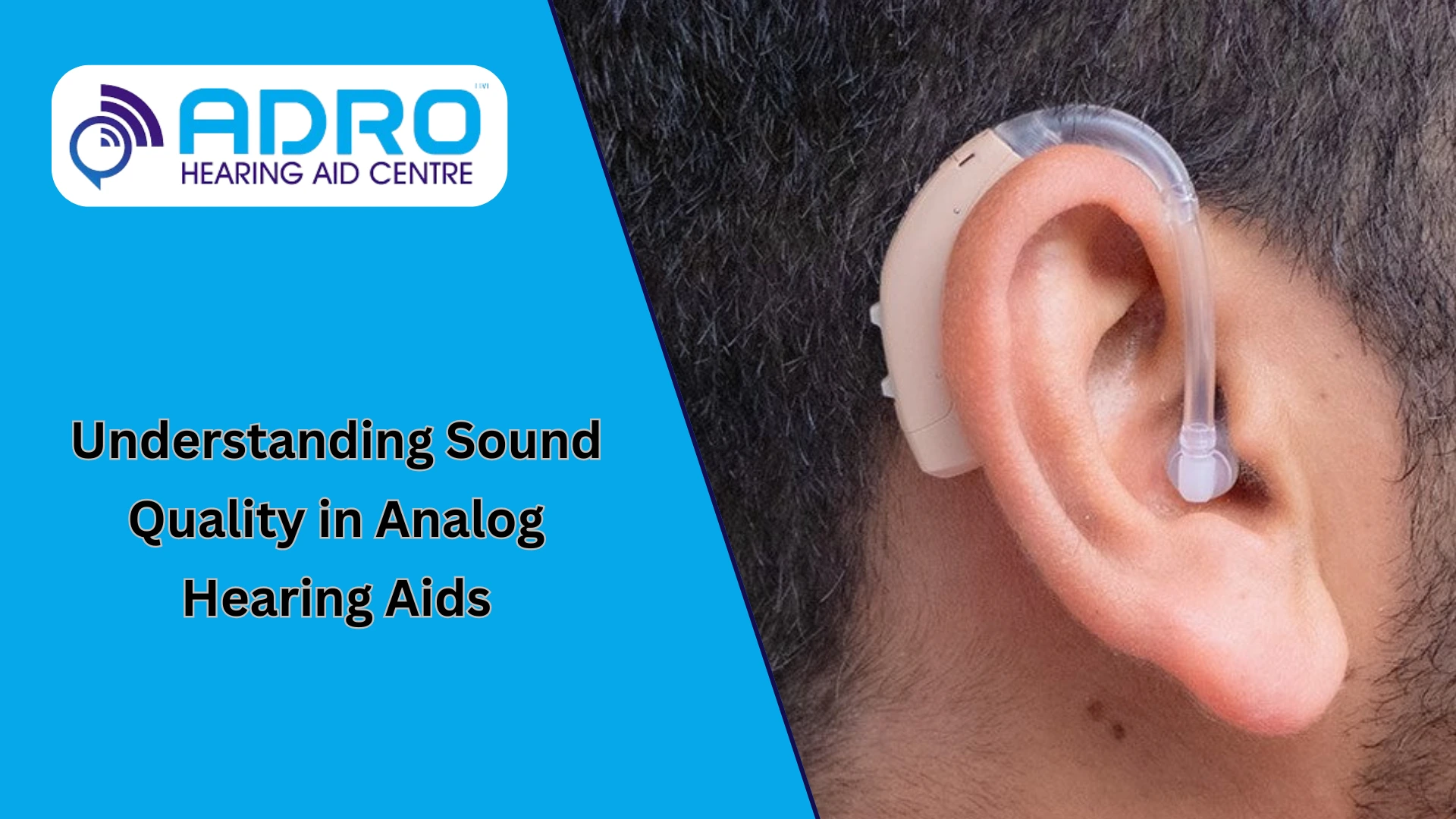

Understanding Sound Quality in Analog Hearing Aids
The process of selecting an appropriate hearing instrument might be hard to you, particularly when sound quality is taken into consideration. Although the majority of the market is made up of digital models, there are still many users who benefit from analog hearing aids due to their natural sound output and easy-to-use controls.
In case you are considering hearing options or are going to make a call to a hearing aid centre in Chennai for consultation, this blog will help you to understand how the use of an analog device affects your listening experience.
How Do Analog Hearing Aids Produce Sound?
Analog hearing devices operate in the same way as the human ear. They take sound waves through a microphone, convert them into continuous electrical signals, amplify these signals, and deliver them to the ear. Since the signal is kept continuous, the audio is smooth and natural.
No sound is broken down into digital codes nor are there any complex processing layers. The machine just makes the sound louder as it is. This simple route is one of the reasons why so many users of analog audio describe it as being warmer and more familiar.
What Makes the Sound Distinctive?
In contrast to machines that divide the sound processing into several stages, analog versions simply amplify everything that is happening around. Thus, besides speech and music, the noise from the surroundings is also getting amplified. The impression is more like hearing the things with your own ears but at a higher volume. Some users say that it is more “open” as there is a very small change of the original signal.
The feature of the product attracts those people who prefer the natural sound texture and take simplicity for granted. The final output is such that the sound is perceived as being coming from one continuous source, smooth, and less segmented.
Key Factors That Influence Sound Quality
There are many factors inside the device and outside of it that determine the quality of the sound of analog devices. Knowing these helps to understand what fits your life better.
1. Microphone Sensitivity
The microphone is like the user’s ears, and it listens to the environment. A high-sensitivity microphone can even catch a whisper or a faraway talk. When the sensitivity is turned down, these sounds may seem to be just a little.
2. Amplifier Performance
The amplifier is the one who grabs the signal and pushes it further. Volumes will be made with no roughness by a clean and well-thought-out amplifier. When the quality is bad, the sound may become unpleasant or fuzzy at a louder level.
3. Fit and Position
Where the hearing aid is placed is one of the main factors of sound clarity. Good fitting helps the hearing aid to work smoothly and noise from feedback is minimized.
4. Hearing Aids Cell
Good condition hearing aids cells are the main reason for constant sound output. When the battery is draining quickly or short of power, sound levels may change. Low power may result in weak output, distortion, or the volume being not continuous.
5. Ear Canal Conditions
Earwax accumulation and moisture are just some of the things that can change the path of the sound wave to the ear. Doing it regularly is one of the ways to keep the ear clean and clear.
Why Some Users Choose Analog Sound
For many people, comfort is the number one factor when deciding to use an analog device. They want the sound to be as close to new as possible. There is no layered processing; what you get is the world as it is, just a bit louder to support better understanding. Hence, conversations become more real and less artificial.
There is also the advantage of simple control. Users can change the volume fast without going through the menus. Seniors or anyone who is looking for low-maintenance devices may like this simplicity a lot.
Moreover, the warm signal output may be the reason why music becomes more pleasing for some listeners. The sound keeps its natural tone, particularly in quiet situations.
Maintaining Sound Quality
It is the small steps that create a big impact.Below are some habits that lead to higher sound quality:
- Changing the hearing aids cell on a regular basis
- Cleaning the device to remove dust or moisture
- Keeping it in a dry place
- Having a professional cleaning from time to time
- Not exposing the device to heat or sweat
Doing these things is what keeps the parts of the hearing aids that collect and amplify sound in a good condition, thus making it possible for the sound to be clear.
Working With a Professional Matters
It is not simply a matter of buying a device when selecting a hearing aid.
One needs a hearing test, a thorough understanding of the lifestyle, and determination of the environment where you spend most of your time. A skilled professional takes into account these factors and suggests a device which is comfortable. Also, they can adjust the settings to your liking and provide you with maintenance instructions.
If you have never used analog hearing aids and are only trying them, then a time of adjustment is necessary. As you continue to use them, the experience becomes more comfortable. Appointments with the doctor will help your device to perform better and be more supportive of your needs.
Analog hearing aids provide an almost perfect sound with their natural and smooth amplification of the original sound. They are great, comfortable, everyday companions mainly in peaceful and quiet situations. The sound is a very familiar one to the users, warm, and quite easy to grasp. Also, the simplicity of their construction and the availability of functionalities make them a reliable option.
Adro is a great help if you need support or guidance during the fittings or evaluation while you are checking out various hearing devices. We help you in the device selection process and provide several other services like speech therapist in Chennai, which can be really helpful and comforting for your hearing journey.