



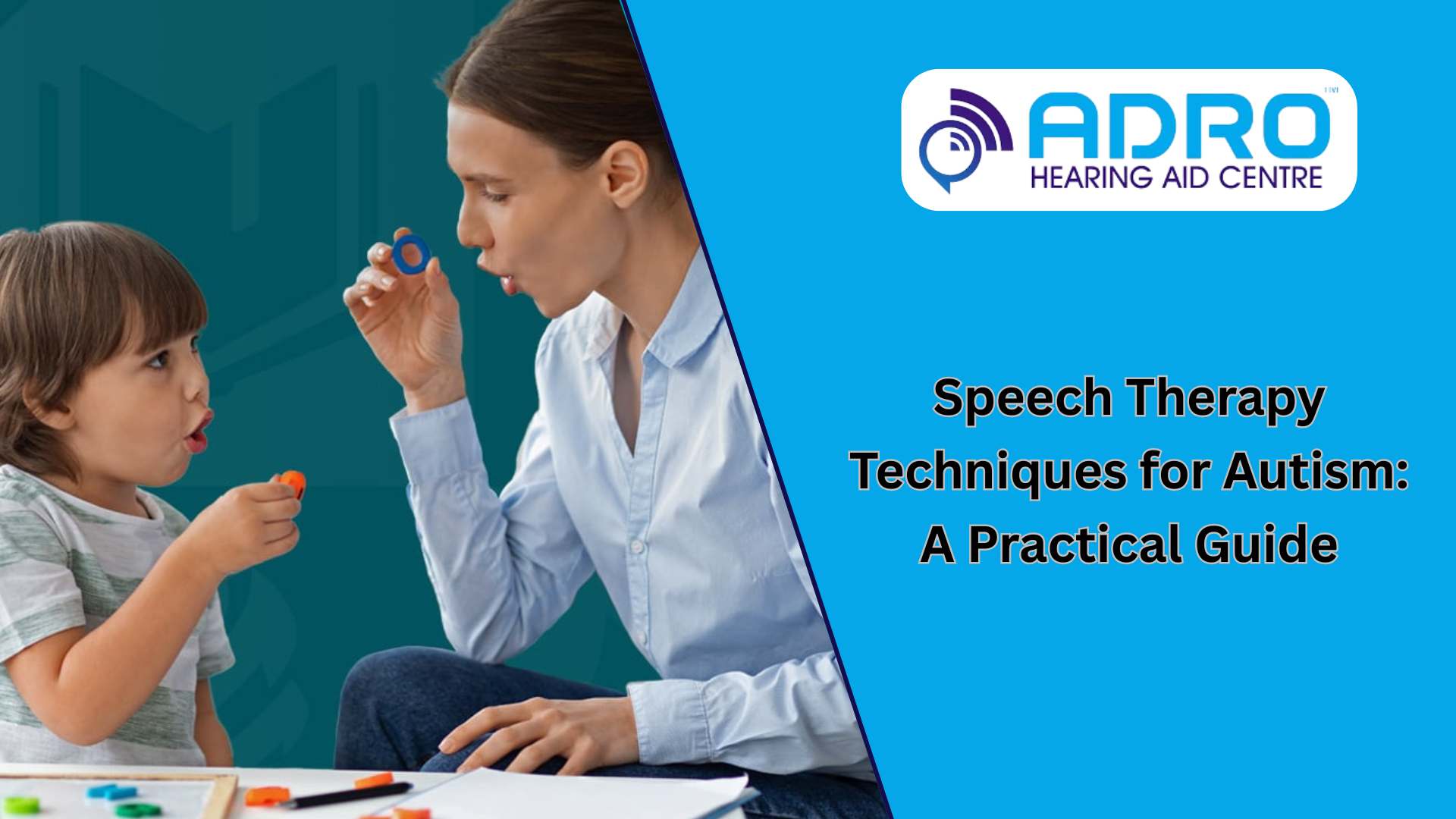

Speech Therapy Techniques for Autism: A Practical Guide
Communication is a bridge. For kids with Autism Spectrum Disorder (ASD), creating that bridge needs patience, a framework, and appropriate help. Most of the time, moms and dads want to locate a speech therapist in Chennai who can provide them with the necessary assistance and this way facilitate expression, clarity, and connection. Speech therapy enables children to use the language most familiar to them, be it spoken, gestured, or a different form, to express their needs.
This blog dives into the speech therapy methods implemented in autism cases and also provides speech therapy exercises that are convenient to do at home and can help in making progress consistent.
Why Speech Therapy is Important for Autism
Children with ASD can be faced with a variety of challenges when it comes to communication. They may have difficulties in vocabulary, articulation, sentence formation or social interaction. Speech therapy takes these problems to the level of smaller skills, which can be developed gradually.
The treatment makes a child capable of:
- Improving receptive and expressive language
- Developing clearer speech patterns
- Enhancing non-verbal communication
- Decreasing the frustration caused by communication
- Acquiring the confidence for social interaction
Growth is not always steady. Each child develops in his/her own way. What is most important is that there is support and communication is practiced in a friendly manner.
Core Speech Therapy Techniques That Help
1. Visual Supports and Picture Exchange
For autistic kids, visuals can be more understandable than verbal communication in many cases. When a child cannot yet speak, a Picture Exchange Communication System (PECS) helps him to show his needs by pictures or symbols.
The positive effects are better communication skills, lessening of the child’s frustration and a well-organized way for the child to communicate. You may also involve your child in the practice of using flashcards, picture boards, and real objects as memory aids.
2. Modelling and Imitation Practice
Children acquire knowledge through observation and imitation. When a parent or teacher is modelling, they show the use of words or gestures and then assistant the kid a little by showing him the way, without forcing him, to copy.
Example
- Do not command “Say water”; just show the cup to the kid and say Water.
- After quite a long time the use of words in everyday situations together with the pictures seen led to the child’s coming out with words of his own without any prompt.
3. Play Based Language Learning
Playing is a great way to establish a communication that is less stressful. Playing also introduces many new words and expressions in a natural way.
To Give An Example; Take a number of toy animals and tell the story of the toy animals doing different things: the tiger jumps or the elephant eats. Stop and give the child a chance to answer. Participation can be a child simply nodding or gesturing. The point here is to involve the child, not to get the correct answer.
4. Prompting Techniques
Prompts help the kid to come up with the right sound or answer. They can be verbal cues, such as a part of a word, a gesture like pointing or a physical prompt, which is generally help given by a professional.
The ultimate target is to have the prompts reduced step by step. The child’s communication skills get better when the helpers are still there, but they are used less and less.
5. Articulation and Oral Motor Exercises
Clear speech is dependent on the coordination of the jaw, lips, and tongue movements. The following gentle oral motor-based speech therapy exercises will help you to increase the muscle power of the articulation.
Some of the helpful activities are
- Blowing bubbles or balloons.
- Drinking through a straw
- Moving the tongue from side to side
These exercises are fun, and your child will love doing them. In addition, they are also suitable for daily practice at home.
How Parents Can Support Speech Development at Home
When parents of children undergoing speech therapy in Chennai, reinforce learning after sessions, the therapy becomes more effective. A time span of ten to fifteen minutes daily can lead to a gradual improvement.
How to help at home:
- Use less complex sentences during interaction
- Help the child to speak by giving answers but don’t force him to talk
- Reward even the tiniest progress
- Keep eye contact with the child while talking
- Read picture storybooks and talk about characters or things
- Regular, brief practice of the skill is more effective than long, difficult sessions.
When to Seek Professional Help
Early detection is definitely advantageous. In case your kid has significantly delayed speech, is uninterested in interacting, has difficulty with articulation, or is confused by the instructions given to him/her, a consultation with a speech specialist will help you understand the situation and find the way. Communication can gradually become simpler through an organised program which is specially made for you by the experts.
Speech therapy is the way through which kids with autism can become more confident in sharing their thoughts. Change can sometimes be very slow, but in fact, each word and each movement is a significant achievement. Communication, which was once difficult, becomes more natural and meaningful through daily practice and if a child has the right support system.
Adro provides the best speech therapy with a team of skilled professionals who are aware how each individual child learns. Along with this, we are a reliable hearing aid centre in Chennai, hence, they can be a complete source of support for people with communication needs.