




How Long Does a Hearing Test Take? A Complete Breakdown
A lot of people delay hearing tests for one simple reason, they assume it’s going to eat up half their day. It won’t. If you’ve been thinking about visiting a hearing aid centre in Chennai but keep pushing it off, the time factor genuinely shouldn’t be the thing stopping you. Most hearing evaluations are done within an hour. Some even faster. And the information you walk away with? Worth every minute.
Here’s exactly what happens and how long each part takes.
The Actual Time? 30 to 60 Minutes
That’s the honest range for a standard adult hearing test. It covers everything a short conversation before the test, the evaluation itself, and a proper discussion of your results afterward. A basic screening can finish in 20 minutes. If your case needs more detailed investigation, you might be there for 90. But that’s the exception, not the rule. For most people, it fits comfortably within a lunch break.
What’s Happening in That Hour?
The opening conversation: 5 to 10 minutes
Before anything starts, your audiologist will ask you a few questions. How long have you noticed changes? Any ringing? Do you work somewhere noisy? It sounds casual, but this context shapes how they interpret your results. It matters more than people realize.
A quick look inside your ears: 5 minutes
Using a small instrument called an otoscope, they check whether something physical earwax, fluid, a blockage might already explain what you’re experiencing. Completely painless. Over before you know it. Sometimes this step alone answers the question.
The main test : 15 to 20 minutes
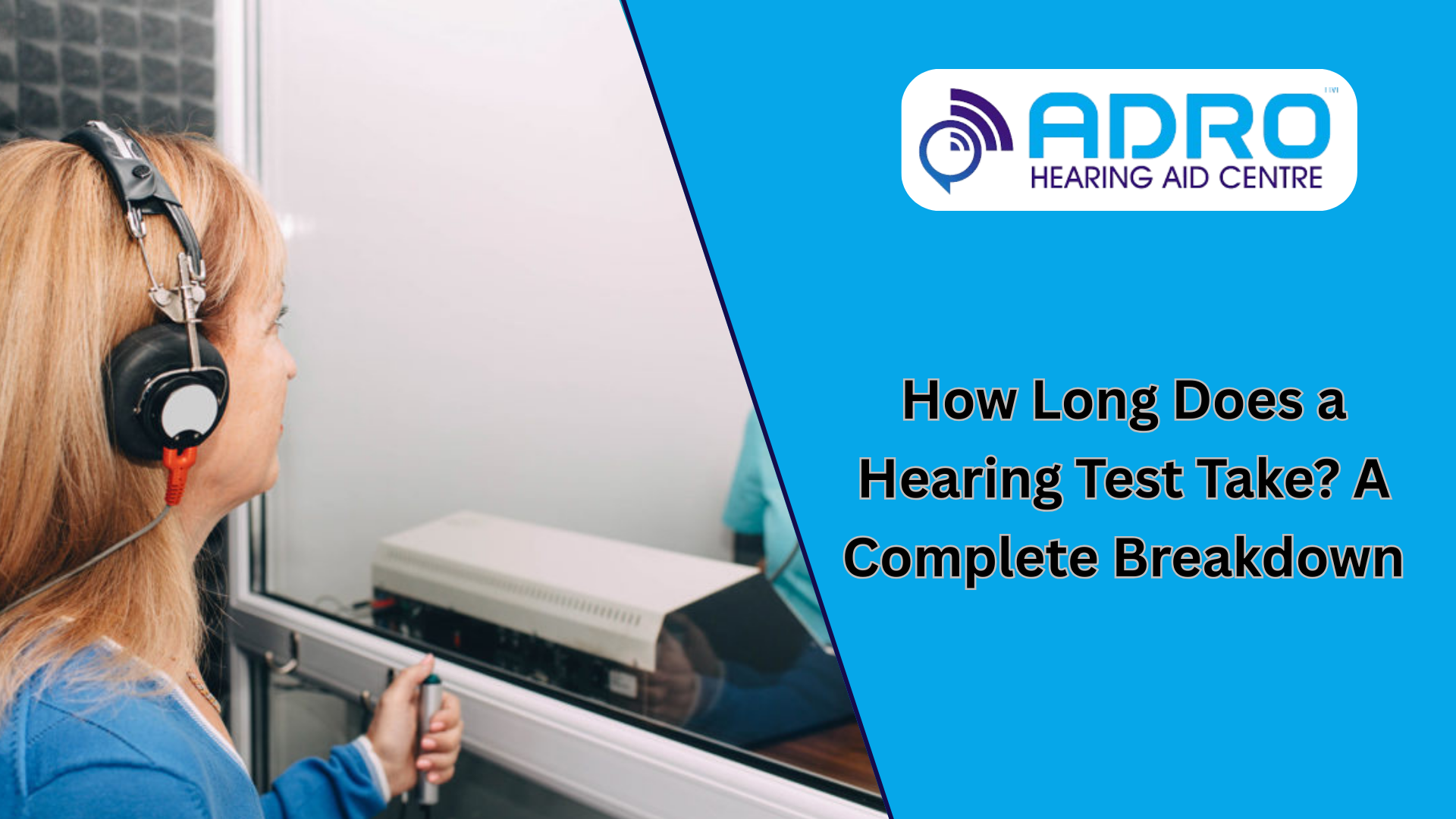
You sit in a soundproof booth, put on headphones, and press a button whenever you hear a tone. Different pitches. Different volumes. Each ear separately. There’s nothing to study for and nothing to get wrong. The results form an audiogram essentially a visual map of your hearing across different frequencies. It tells the audiologist exactly where your hearing is functioning well and where it’s starting to struggle.
Speech clarity testing: 5 to 10 minutes
This one goes a step further. Instead of tones, you’re listening to spoken words and repeating them back. It’s not just about what volume you can detect, it’s about how clearly your brain is processing what it hears. This is often where people get the most useful insight, especially those who’ve been struggling to follow conversations in noisy rooms or on phone calls.
Eardrum movement check: 5 minutes
A small probe sits gently at the entrance of your ear canal and measures how your eardrum responds to pressure changes. It picks up things like fluid behind the eardrum or Eustachian tube problems that pure-tone testing won’t catch on its own. Quick, comfortable, and adds an important layer to the overall picture.
Going through your results: 10 to 15 minutes
This part matters more than people expect. Your audiologist doesn’t just hand you a printout and send you on your way. They explain what the findings mean in plain language, talk through your options, and answer whatever you’ve been sitting on. It’s an actual conversation not a rushed handover.
When Does It Run Longer?
If additional tests are needed like an OAE (Otoacoustic Emissions) test or Auditory Brainstem Response the session extends a bit. These are more specialized and aren’t required for everyone. Children’s assessments tend to take a little more time and for good reason. Kids don’t always respond to a clinical setting the way adults do, so audiologists adapt the process to keep them calm and engaged, sometimes turning parts of the test into a game. But for a typical adult appointment? An hour is a safe and realistic estimate.
Anything You Should Do Before Going?
Try to avoid prolonged loud noise in the 16 hours before your appointment. If you were at a loud event the night before, your ears may still be temporarily affected and the results could reflect that. Bring a list of any medications you’re currently taking certain drugs, including some antibiotics and anti-inflammatory medications, can impact hearing. Beyond that, you don’t need to prepare anything special. Just show up.
You’ll Leave Knowing Something You Didn’t Before
That’s really the point. Some people walk out relieved. Others finally understand why conversations have felt so exhausting lately. Both outcomes are valuable. A hearing test doesn’t just measure loss, it gives you a clear, honest starting point for whatever comes next.
At Adro, the care doesn’t stop at hearing aids. For those who need support beyond the test and fitting, Adro also works with qualified speech therapist in Chennai helping people not just hear better but communicate more confidently in their daily lives too.
If you’ve been putting this off, book the appointment. It takes an hour. The clarity it brings lasts a lot longer.