



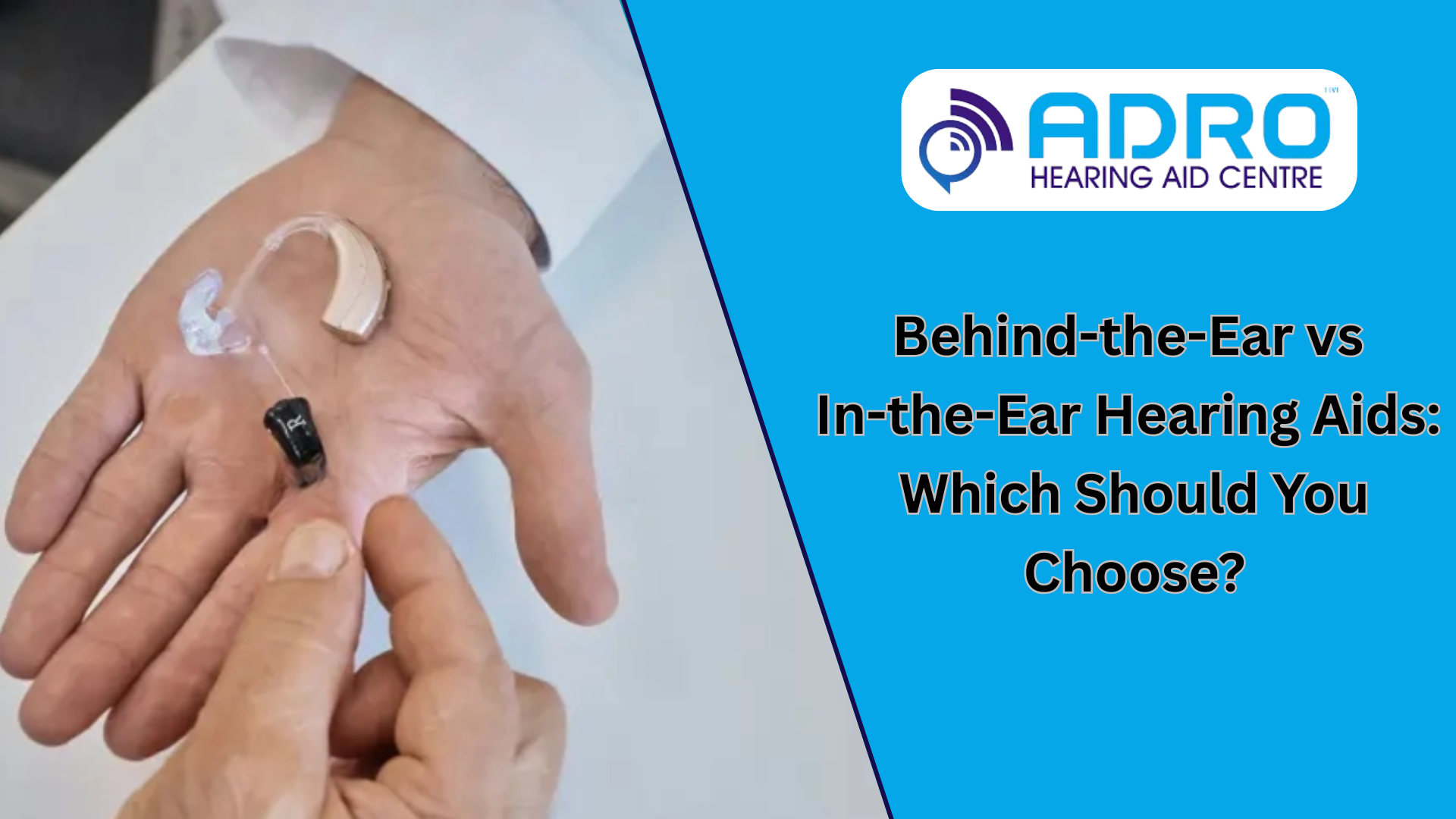

Behind-the-Ear vs In-the-Ear Hearing Aids: Which Should You Choose?
Most people walk into a hearing aid centre in Chennai already confused, and that’s fair. There are a lot of options. But strip it all back, and the real question is simpler: do you go with behind-the-ear hearing aids or something that sits inside the ear? Both get the job done. Both have people who swear by them. The difference comes down to your hearing levels, how you spend your day, and, honestly, how much the look of a device matters to you.
Let’s break it down properly.
What Are Behind-the-Ear Hearing Aids?
Behind-the-ear hearing aids (commonly called BTE) sit, as the name says, just behind your outer ear. A small curved casing houses the electronics, and a thin tube or wire connects it to a custom earmould or dome that fits inside your ear canal.
They’ve been around the longest of any hearing aid style, but don’t let that fool you. Today’s BTE models are compact, powerful, and packed with wireless features that would’ve seemed impossible a decade ago.
Key advantages of behind-the-ear hearing aids:
- Works across all hearing loss levels, from mild to profound. No other style matches this range.
- Longer battery life, whether you’re using disposable cells or a rechargeable model.
- Easier to handle day-to-day, with larger controls that are genuinely manageable for older users or those with limited dexterity.
- Less earwax trouble, since the electronics sit outside the canal and stay cleaner longer.
- More accessory options, including Bluetooth streaming, remote mics, and telecoil support.
The one trade-off? They’re more visible. The casing behind the ear is noticeable, especially in shorter hair. For some people, this is a deal-breaker. For others, it simply doesn’t matter.
What Are In-the-Ear Hearing Aids?
In-the-ear (ITE) hearing aids sit entirely within the outer ear or ear canal. This category includes several sub-styles: ITE (fills the bowl of the ear), ITC (sits partly in the canal), CIC (sits completely in the canal), and the smallest of all: invisible in ear hearing aids, also called IIC.
The core appeal here is discretion. The more the hearing aid sits deeper in the canal, the harder it is to notice.
Key advantages of in-the-ear styles:
- More cosmetically discreet, ranging from slightly visible to virtually undetectable.
- Invisible in ear hearing aids sit so deep in the canal that they’re essentially hidden, even when someone looks directly at your ear.
- More natural sound quality in some cases, because the device benefits from the ear’s natural shape to direct sound.
- No behind-ear component, so they’re less affected by glasses, masks, or headwear.
- Convenient for an active lifestyle: they stay put during exercise, don’t catch wind as much, and feel more like a natural part of your ear.
Smaller devices do come with real trade-offs though. Battery life is shorter, earwax buildup is a bigger issue, and very small styles like CIC and IIC sometimes skip features like Bluetooth or directional mics. Worth knowing before you decide.
The Role of Digital Hearing Aids in Both Styles
Whichever style you go with, the technology inside matters just as much as the fit. Digital hearing aids don’t just make sound louder; they process it. A good one reads the room, cutting out background noise in a busy restaurant while keeping speech clear, and then adjusts quietly when you step outside.
Digital hearing aids have transformed what’s possible for people with hearing loss. Features like:
- Automatic environment detection: the aid switches modes without you touching anything
- Bluetooth connectivity: stream calls, music, and TV directly to your ears
- App-based controls: adjust volume and settings from your phone
- Noise suppression algorithms: reduce wind noise and background chatter
- Feedback cancellation: eliminates the whistling that plagued older analogue devices
All of these come in both BTE and ITE formats at various price points. The key is matching the technology level to your actual needs, not just buying the most expensive model available.
How to Decide: A Practical Guide
Neither style is objectively better. Here’s a simple way to think it through:
Choose behind-the-ear hearing aids if:
- Your hearing loss is moderate to severe or profound
- You want the longest battery life and easiest maintenance
- You’re a first-time user who’d benefit from easier handling
- You wear hearing aids in both ears and want consistent performance
- You frequently use accessories like TV streamers or remote microphones
Choose in-the-ear styles (including invisible in ear hearing aids) if:
- Your hearing loss is mild to moderate
- Discretion is a top priority for you
- You’re active and want a low-profile device
- You don’t wear glasses or masks that might interfere with a behind-ear device
- You’re comfortable with slightly higher maintenance
Consider your lifestyle seriously. A retired teacher with severe hearing loss needs something very different from a 35-year-old professional with mild hearing loss who attends client meetings daily. The device that works best is always the one that fits your real life, not someone else’s.
What ADRO Recommends
At ADRO, audiologists don’t recommend a style based on what’s popular. They run a full diagnostic first: pure tone audiometry, tympanometry, and speech discrimination tests. Then they suggest options based on your actual audiogram results, ear canal size, lifestyle, and budget.
Both behind-the-ear hearing aids and in-the-ear styles are available across all major brands at ADRO, including Phonak, Signia, Oticon, Resound, and Widex. You also get the chance to trial a device at home before committing, so you can feel the difference in your own environment, not just in a clinic.
The goal is always the same: the right fit for the right person.
Take the Next Step
Still on the fence? That’s what audiologists are for. Skip the guesswork and book a proper hearing test first. Once you know your audiogram results, the right style becomes a much easier choice.
ADRO has branches in Chennai, Trichy, Nagercoil, and Bengaluru, so finding a hearing aid centre near me is straightforward wherever you are. Walk in, get tested, and let the numbers guide the decision. No pressure, no upselling, just a clear picture of where your hearing stands and what will actually help.